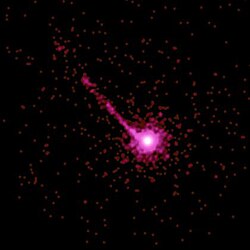
Active Galactic Nuclei (AGN) are energetic astrophysical objects powered by accretion onto supermassive black holes (SMBH) in the center of active galaxies. These powerful sources emit in the full electromagnetic spectrum, and each of the wavelength ranges provides information on the physics of different sub-structures in the AGN such as the relativistic jet (if any), the dusty torus, accretion disk, the corona as well as the environment of the AGN itself.
I began teaching in my second year of undergraduate studies and gained three years of experience in both formal and non-formal education. My first teaching role was at TUMO Center for Creative Technologies, where I worked as a content developer and workshop leader in Robotics. We taught teenagers (ages 12–20) how to build and program LEGO robots. During my time at TUMO, our team participated in the NASA SpaceApps Challenge—and, well, we lost. This remains one of my favorite stories I would love to tell at Fuckup Nights—a truly hilarious experience! The following year, a team from our Robotics department, including teaching assistants, top students, and volunteers, competed in the Robotics Olympiad in Washington, D.C., under the supervision of my colleague, a highly talented engineer. They won a bronze medal, which was a huge achievement for our department.
The exploration of AGN and quasars in the first few billion years of cosmic history started with the advent of large-area digital sky surveys like the Sloan Digital Sky Survey (SDSS, e.g., York et al.,2000). This resulted in the first discoveries of quasars at 𝑧 > 5 (e.g., Fan et al., 2001). The study of high redshift quasars has provided fundamental knowledge on the first galaxies and SMBHs, which are currently, more than 500 at 𝑧 > 5.6, most of which are located in the Northern Hemisphere (e.g., Fan et al., 2023). Those observations firstly confirmed the existence of SMBHs with masses up to a few billion 𝑀⊙ within 1 billion years after the Big Bang, showing consistent rest UV/optical spectra with low redshift powerful quasars. Secondly, sub-mm observations showed that these quasars are hosted in massive, gas-rich, and highly star-forming galaxies (e.g., Decarli et al., 2018). These massive galaxies are thought to be fed by large amounts of gas (T ∼ 104 K) through the Circumgalactic Medium (CGM), which can be emitted via the Ly𝛼 line (e.g., Cantalupo et al., 2014). Additionally, the study of intergalactic medium (IGM) absorption features in quasar spectra established the end of the epoch of reionization between redshift 5 and 6 (𝑧 ∼ 5.3; Fan et al., 2023; Bosman et al., 2023) The CGM is composed by the gas surrounding galaxies inside the virial radii but outside of the galaxy disks (Tumlinson et al., 2017). The gas present in the CGM plays a crucial role in galaxy evolution. It serves as the fuel for star formation, facilitates galactic feedback and recycling, and regulates the gas supply of galaxies.
In the 1980s, the discovery of the first quasar at z > 4 was made possible by digital large sky surveys, marking a significant advance in our understanding of the distant universe. (e.g., Fan et al. 2023). Since then, next-generation surveys such as WISE, 2MASS, Gaia, and Pan-STARRS have expanded our knowledge of the universe by using advanced technologies to map it across different wavelengths with unprecedented precision and depth. These digital large-area sky surveys, in combination with deep, multi-wavelength observations of smaller regions of the sky by projects like COSMOS, have led to significant discoveries and characterizations of AGN and quasars beyond the local universe (e.g., Scoville et al. 2007b, Salvato et al. 2009, Marchesi et al. 2015). The Rubin Observatory, Euclid, and Roman Space Telescope will provide new imaging surveys with unprecedented coverage and depth. Further progress in photometric redshift methods is needed to fully utilize these datasets.
June 2026: My first-author paper, 4MOST ChANGES: Catalog of high-redshift quasar candidates (4.5 < z < 7) selected with SED fitting, was published in A&A (Mkrtchyan et al. 2026, A&A 710, A170)!